
Nutrition as the Foundation of Empowered Living
In the pursuit of mindful wellness and empowered living, nutrition plays a foundational role. The food we prepare each day either supports sustained energy, muscle recovery, cognitive clarity, and metabolic balance—or works against those goals. Seafood, rich in lean protein and essential fatty acids, stands out as one of the most powerful additions to a wellness-focused diet. Yet the way it is cooked determines whether those benefits are fully realized.
For many people striving to eat clean, seafood represents a smart nutritional choice. Fatty fish such as salmon and mackerel provide omega-3 fatty acids that support heart and brain health, while white fish and shellfish offer high-quality protein with relatively low saturated fat. However, proper cooking is not just about flavor or safety; it directly affects texture, digestibility, and nutrient preservation.
Why Proper Cooking Matters for Wellness
Understanding how to cook seafood correctly allows you to retain moisture, protect delicate fats, and maintain structural integrity in the protein. Overcooking can dry out flesh, toughen muscle fibers, and reduce enjoyment—making it harder to sustain healthy eating habits long term. Undercooking, on the other hand, may present safety concerns. Striking the right balance is an empowering skill that builds confidence in the kitchen and strengthens your relationship with nourishing food.
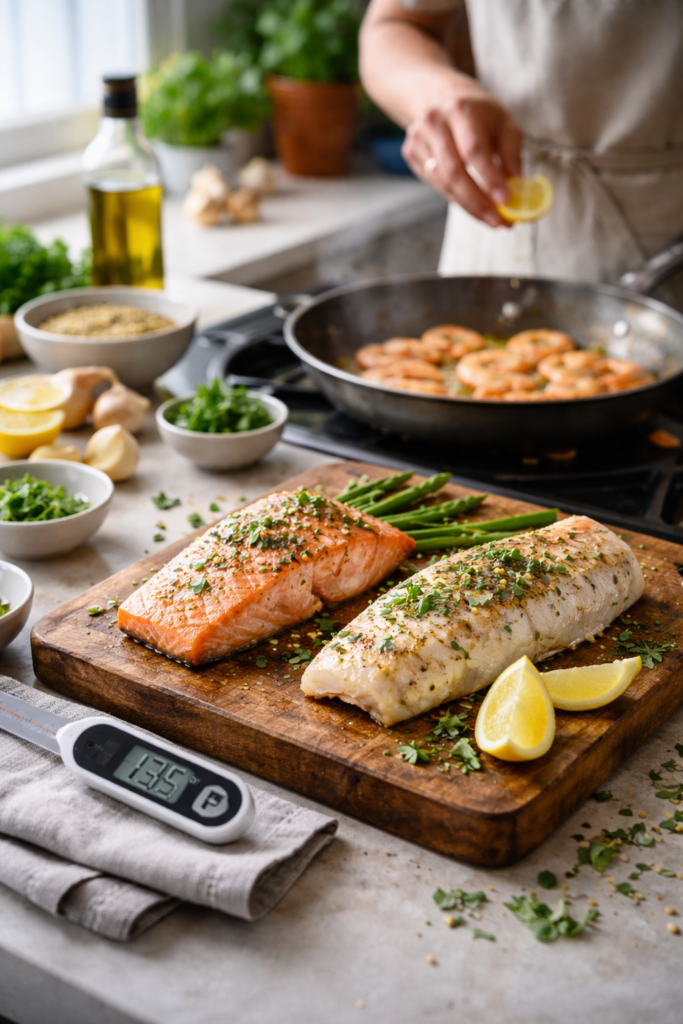
When learning how to cook seafood, it helps to focus on three primary cues: temperature, color change, and texture. These signals guide you toward the optimal cooking point without guesswork. Most fish transition from translucent to opaque as heat penetrates the flesh. White fish begins to flake gently at its thickest part. Shrimp shifts from gray and flexible to pink and firm, forming a relaxed “C” shape. Paying attention to these sensory indicators builds practical awareness and reduces stress during meal preparation.
Temperature and Carryover Heat
Temperature is one of the most reliable tools for ensuring seafood is cooked safely while maintaining quality. An instant-read thermometer inserted into the thickest portion can confirm when fish has reached a safe internal level. However, relying solely on numbers can lead to overcooking if you ignore carryover heat—the continued cooking that occurs after food is removed from the heat source.
Removing seafood slightly before it reaches its final target temperature allows residual warmth to finish the process gently, preserving tenderness. This small adjustment reflects a broader wellness principle: sometimes stepping back at the right moment produces better results than pushing further.
Texture and Visual Cues
Texture offers another valuable clue. Properly cooked fish feels moist and separates along its natural muscle lines with minimal resistance. If it resists flaking or still appears glossy and raw in the center, it likely needs a brief additional cooking time. Conversely, if it feels stiff, dry, or crumbly, it may have surpassed its ideal stage.
From a visual standpoint, color shifts provide reassurance. White fish turns fully opaque, salmon lightens while retaining moisture in the center, and shellfish develop a firm, pearly appearance. These small transformations are reliable guides when you approach cooking with attention and patience.
Protein Quality and Fitness Recovery
From a fitness perspective, preserving protein quality matters. High heat applied for too long can tighten muscle fibers excessively, squeezing out moisture and making digestion slightly more demanding. Gently cooked seafood retains succulence, which supports easier digestion and more enjoyable meals—two factors that influence dietary adherence.
Seafood provides a complete amino acid profile essential for muscle repair and growth. Consuming properly cooked fish after strength training offers high-quality protein without excessive heaviness. The lighter nature of seafood compared to red meat can support sustained energy levels, making it an excellent choice for evening meals that won’t disrupt sleep.
Protecting Omega-3 Benefits
Omega-3 fatty acids, abundant in fatty fish, are also sensitive to prolonged exposure to high heat. While normal cooking does not eliminate their benefits, extreme overcooking can degrade some delicate compounds. Moderate heat methods such as baking, steaming, poaching, or controlled pan-searing help preserve nutritional value while enhancing flavor.
Choosing cooking techniques intentionally aligns with empowered living: making informed decisions that protect long-term health. Even small choices—like lowering the flame slightly or removing fish from heat a minute earlier—can preserve texture and nutrient quality.
Mindful Preparation as a Daily Ritual
Mindful preparation reduces stress in the kitchen. Preparing ingredients in advance, patting seafood dry, seasoning thoughtfully, and preheating pans to moderate levels create a smoother cooking experience. When you approach the stove calmly, you are more likely to notice subtle shifts in color and texture.
This awareness transforms meal preparation into a grounding ritual rather than a rushed obligation. Each meal becomes an opportunity to practice presence and reinforce healthy habits that compound over time.
Digestibility and Daily Vitality
Digestibility is an often-overlooked wellness factor. Seafood that is cooked just right remains moist and tender, easing the digestive process. Overly dry protein may require more effort to break down, potentially leading to discomfort for some individuals.
By respecting timing and temperature, you support not only performance goals but overall gut comfort and sustained daily vitality. Balanced digestion contributes to clearer thinking, steadier energy, and improved mood—all pillars of mindful wellness.
Building Confidence Through Skill
Building skill in the kitchen strengthens self-efficacy. Each successful meal reinforces the belief that you can care for your body intentionally. Recognizing the ideal moment to remove fish from heat is a small but meaningful decision that compounds over time.
These micro-competencies extend beyond cooking, influencing other wellness habits such as portion awareness, meal timing, and balanced macronutrient intake. Confidence grows when action consistently aligns with intention.
A Practical Path to Optimal Wellness
Ultimately, mastering seafood preparation is about more than technique—it is about aligning action with intention. When you fuel your body with properly cooked, nutrient-rich meals, you reinforce a lifestyle built on awareness and deliberate choice.
Optimal wellness thrives on consistency, and consistency depends on confidence. When you understand the signals that indicate seafood is cooked to its ideal point, you remove uncertainty from your routine. The result is nourishing food that supports strength, cognitive clarity, heart health, and sustained energy—hallmarks of a truly empowered life.