
Most families don’t go looking for information about addiction treatment until they need it urgently. And when they do, they often find themselves overwhelmed by a system that feels complicated, expensive, and hard to navigate without a guide.
This post is that guide. It won’t cover every situation, but it will give you a clear, honest picture of how treatment works, what to look for, and how to make a decision you feel good about.
First, Some Important Context
If someone in your family is dealing with a substance use disorder, the first thing worth saying clearly is: this is a health condition, not a moral failure. The American Society of Addiction Medicine defines addiction as a chronic, treatable disease that affects brain structure and function.
According to SAMHSA’s 2023 national survey, over 48 million Americans aged 12 and older met the criteria for a substance use disorder in the past year. But fewer than 20% received any kind of treatment. The gap isn’t primarily about availability. It’s about stigma, confusion, and families not knowing where to start.
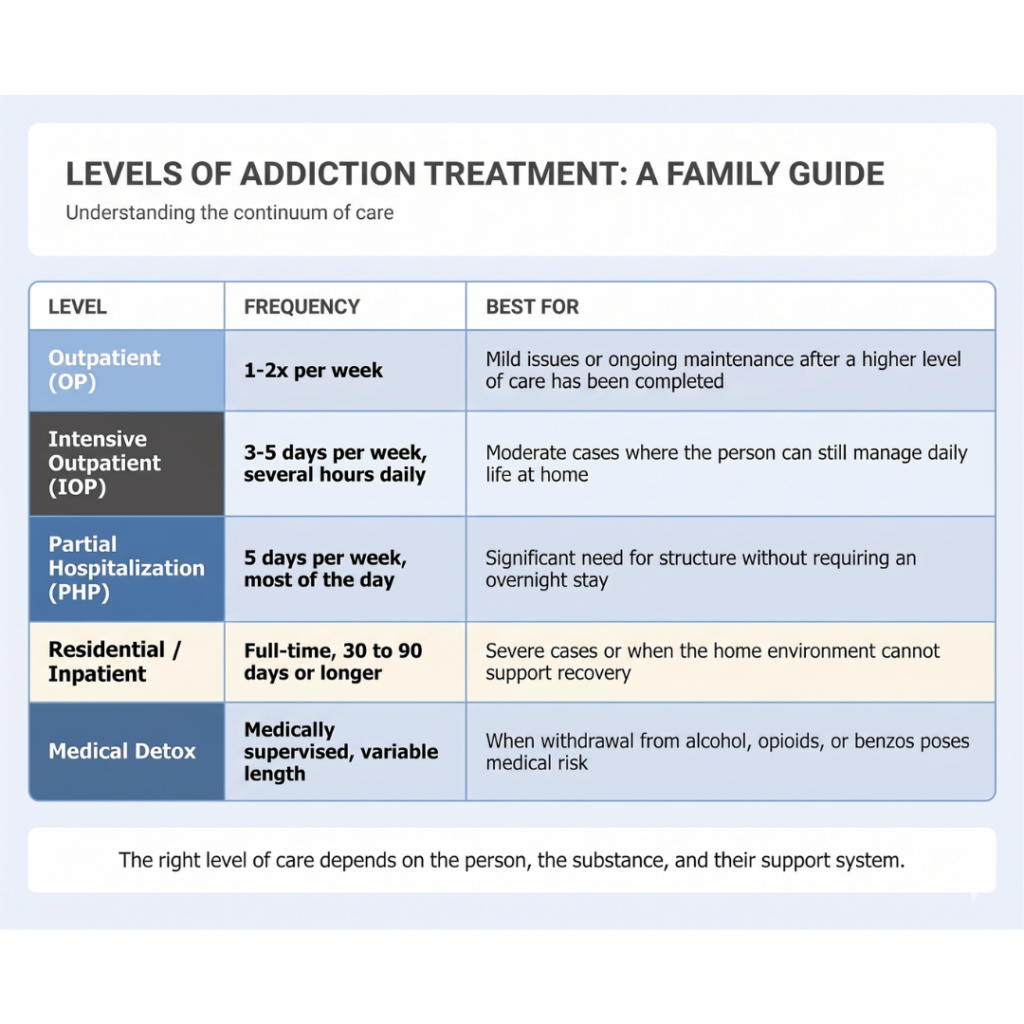
The Different Levels of Care
- Outpatient Therapy (OP): Weekly or twice-weekly sessions with a therapist or counselor. Best for early-stage issues or as ongoing support after a higher level of care.
- Intensive Outpatient Programs (IOP): Typically 3 to 5 days per week for several hours each day. The person lives at home but attends structured programming.
- Partial Hospitalization Programs (PHP): Daily programming, often 5 days per week, without overnight stays. For people who need significant structure but don’t require round-the-clock supervision.
- Residential / Inpatient Treatment: The person lives at the facility for a period of time, typically 30 to 90 days or longer. 24/7 care. Appropriate for severe cases or when the home environment isn’t supportive of recovery.
Most quality treatment providers use a continuum of care model, starting at the appropriate level and stepping down as the person stabilizes and builds recovery skills.
What Happens Inside a Treatment Program
Evidence-based treatment programs typically include individual therapy, group therapy, psychoeducation about addiction and recovery, medical care and medication management if needed, family involvement when appropriate, and aftercare planning.
Some programs, like My Limitless Journeys in Southern California, combine clinical treatment with a supportive, high-quality residential environment. This integrated approach addresses not just the substance use but the whole person, including mental health, physical wellbeing, and life skills.
How to Evaluate a Treatment Center
- Licensing and accreditation. The facility should be licensed by the state and ideally accredited by CARF International or The Joint Commission.
- Evidence-based treatment modalities. Ask specifically what therapeutic approaches they use. CBT, DBT, Motivational Interviewing, and trauma-informed care are examples with strong research support.
- Individualized treatment planning. A good program doesn’t run everyone through the same curriculum. They should assess each person and develop an individualized plan.
- Family involvement policies. Does the program include family therapy or education? Programs that treat addiction as a family system issue tend to produce better long-term outcomes.
- Aftercare planning. What happens when the program ends? Discharge without a clear aftercare plan significantly increases relapse risk.
The Insurance and Financial Reality
One of the biggest practical barriers families face is cost. A few things worth knowing:
The Mental Health Parity and Addiction Equity Act requires most insurance plans that cover mental health or substance use disorder treatment to provide that coverage at the same level as other medical care. Many people have more coverage than they realize.
Most treatment facilities have staff who specialize in insurance verification and will work with families to understand coverage before committing to a program. It is always worth asking what financial options are available before ruling out a program based on cost.
What Families Can Do During Treatment
One of the things that surprises many families is that their work isn’t over once their loved one enters treatment.
If family therapy is offered, participate. Take care of yourself. Sleep. Eat. Maintain some normalcy for other family members. The period of treatment is a chance for the family to breathe and stabilize too.
On Having Realistic Expectations
Recovery is rarely a straight line. Many people have multiple treatment episodes before achieving sustained sobriety. This is common and doesn’t mean treatment isn’t working.
The most helpful thing you can do as a family is learn, stay involved, manage your own expectations, and keep coming back to the same message: you are not alone in this, and help is available.